

Before you leave...
Take 20% off your first order
20% off
Enter the code below at checkout to get 20% off your first order
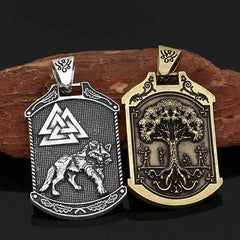
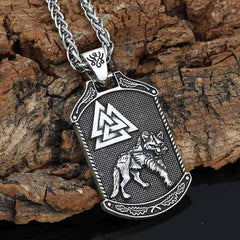
Berserkers get all the attention. Their wolf equivalent, the ulfhednar, barely appear in popular accounts at all.
The name means wolf-coats. The sagas describe them fighting in wolf pelts, in a state the texts treat as something other than ordinary courage, and they are named alongside berserkers as Odin's own men. There were never many, and what actually happened to them is argued over to this day.
The correction that makes the rest of it more interesting rather than less.
Viking is closer to a job description than an identity, and it was a seasonal one. The overwhelming majority of Scandinavians in that period farmed, traded and stayed home. The raiding season was a few months in a life that otherwise involved a lot of livestock.
Which is exactly why the wolf-warrior mattered as a symbol. It was rare and extreme, not typical, and the people wearing an amulet like this were mostly not the ones doing the fighting either.
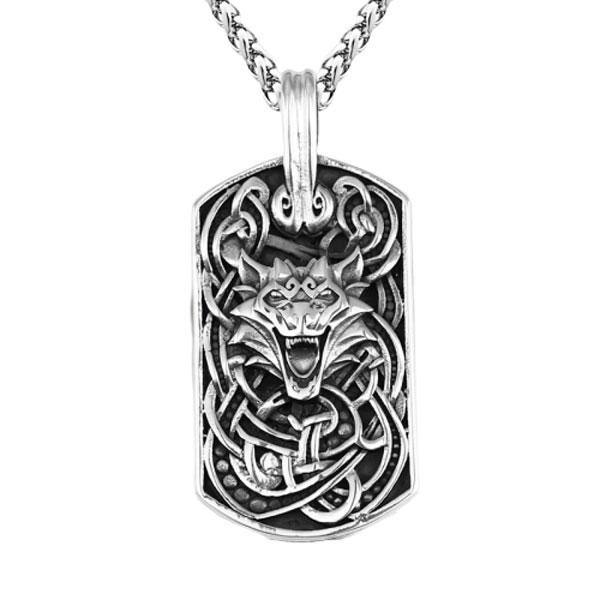
The wolf is shown head on and snarling, mouth open and ears flat, raised at the centre of the plate with Norse interlace looping behind and around it out to the border. The recesses between the strands are darkened so the polished knotwork stands forward.
Stainless steel in a silver or golden tone, so it takes daily wear without tarnishing.
See our article on the Norse wolf and the wolf jewelry range.
Free worldwide shipping, 7 to 12 business days. 30 day returns. See our shipping policy for details.
Thanks for subscribing!
This email has been registered!
| Product | SKU | Description | Collection | Availability | Product Type | Other Details |
|---|
Take 20% off your first order
Enter the code below at checkout to get 20% off your first order


