

Before you leave...
Take 20% off your first order
20% off
Enter the code below at checkout to get 20% off your first order
It came into English from Old Norse and it has never really left. What it originally described is stranger than the modern sense.
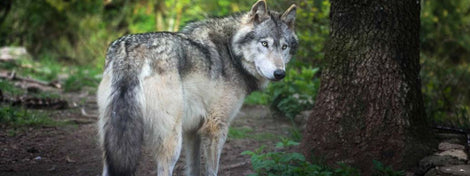
The most likely reading of berserkr is bear-shirt, which puts them alongside the ulfhednar, the wolf-coats. Bear men and wolf men, named for what they wore or claimed to become, described in the sagas as fighting in a state that was not ordinary courage: unarmoured, unresponsive to wounds, and dangerous to be near afterwards.
Theories have been offered for two centuries and none has stuck.
Hallucinogenic mushrooms. Henbane. Extreme alcohol. Self-induced trance and ritual. Simple literary exaggeration by writers describing something they never saw. Every one of these has serious advocates and none has evidence strong enough to close the question.
What survives is a word, a handful of saga descriptions written down centuries later, and a genuine puzzle.
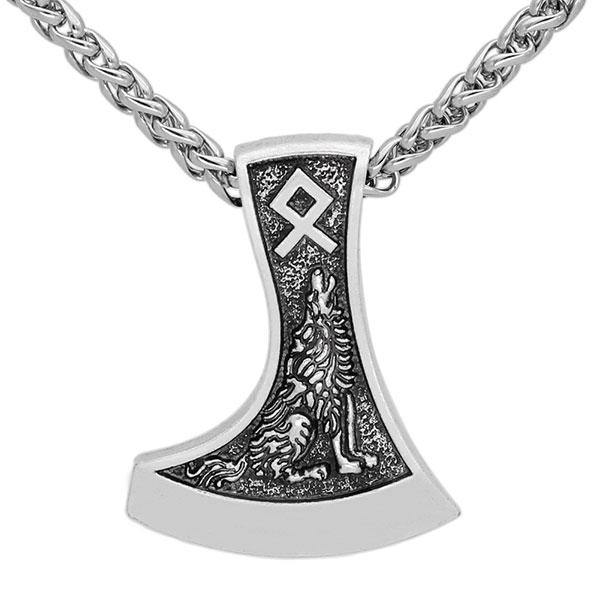
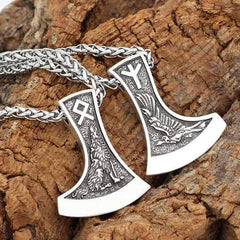
Stainless steel in a silver tone, cut to the outline of a bearded axe head with the blade edge and the top of the shaft left bright and bevelled. The face is recessed and blackened, carrying a single rune above a wolf in profile with its head thrown back mid-howl.
Steel suits a heavy, angular design: it keeps its edges and does not soften at the high points the way plated metal does.
Our article on the Norse wolf has more. See the wolf jewelry range.
Free worldwide shipping, 7 to 12 business days. 30 day returns. See our shipping policy for details.
Thanks for subscribing!
This email has been registered!
| Product | SKU | Description | Collection | Availability | Product Type | Other Details |
|---|
Take 20% off your first order
Enter the code below at checkout to get 20% off your first order


