

Before you leave...
Take 20% off your first order
20% off
Enter the code below at checkout to get 20% off your first order

They have acquired a reputation as a magical system. They were an alphabet, and people used them for what people use alphabets for.
The surviving inscriptions are largely ownership marks, memorials to the dead, and messages of no importance whatsoever. Hundreds of rune-carved sticks recovered from Bergen include business correspondence, a declaration of love, and what is unmistakably a rude joke.
A crusader carved his name inside a prehistoric tomb in Orkney, in runes, which is to say a medieval Norseman found an ancient monument and wrote graffiti on it.
Because it makes them real. An alphabet used by ordinary people for shopping lists and insults tells you far more about the Norse than a mystical cipher ever could.
Some inscriptions are certainly ritual. Most are a bloke labelling his comb.
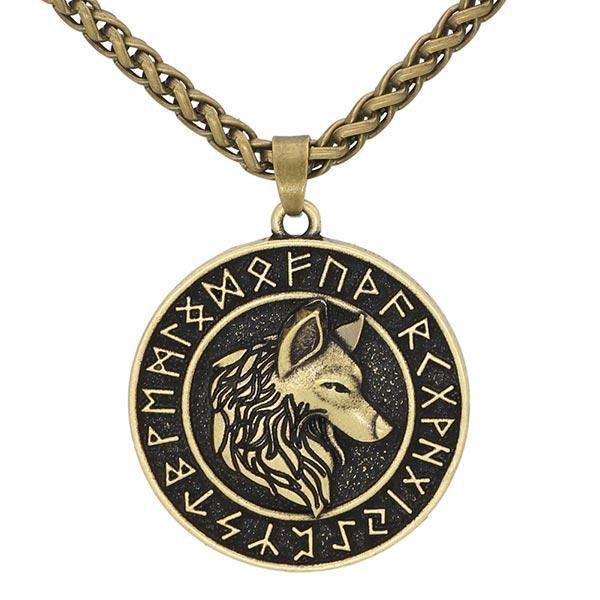
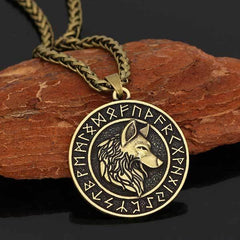
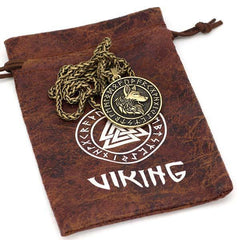
A round medallion with a wolf's head in profile at the centre, facing right, its mane carved as long strands sweeping back from the jaw, raised bright against a darkened field. A ring of runic characters runs unbroken round the rim, letters standing proud of the dark recesses between them.
Stainless steel in a golden or silver tone. Steel keeps carved detail sharp where a softer plated metal would round it off within a year.
Our article on Fenrir and the Norse wolves covers the mythology. See wolf pendant necklaces.
Free worldwide shipping, 7 to 12 business days. 30 day returns. See our shipping policy for details.
Thanks for subscribing!
This email has been registered!
| Product | SKU | Description | Collection | Availability | Product Type | Other Details |
|---|
Take 20% off your first order
Enter the code below at checkout to get 20% off your first order


