

What Does Alpha Mean in a Wolf Pack?

The alpha wolf is the animal everyone thinks they know: the one at the top, the one that fought its way there, the one the rest obey. Half of that is right.
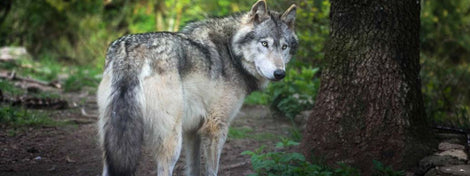
An alpha wolf does lead, does eat first and does hold the breeding rights in its group. What it did not do is win a contest. In a wild pack, the alpha is simply the parent.
What the word actually describes
A wild wolf pack is a family: a breeding pair and their young from this year and previous years. The two adults at the centre of it are the animals the term alpha refers to.
They lead because they are older, more experienced and more capable, and because the rest of the group are their offspring. There is no ladder, and there is no vacancy to compete for. Our article on how wolf packs are formed covers where the ranked hierarchy came from and why biologists abandoned it.
The word survives because it is useful shorthand and because it captures something real. Watch a pack and you will see one pair making the decisions.
What the breeding pair decides
Three things, and they are the three that keep a pack alive.
Hunting. The pair lead the group toward prey and set the pace of a pursuit. After a kill they eat first, which is not a privilege so much as insurance: the animals the pack cannot afford to lose are fed first.
Movement. Where the family travels, when it moves on and where it holds ground are decisions the pair make. So is defence of the territory when another pack tests the boundary.
Breeding. In most packs the pair are the only wolves that reproduce, which is the single most consequential thing about their position.
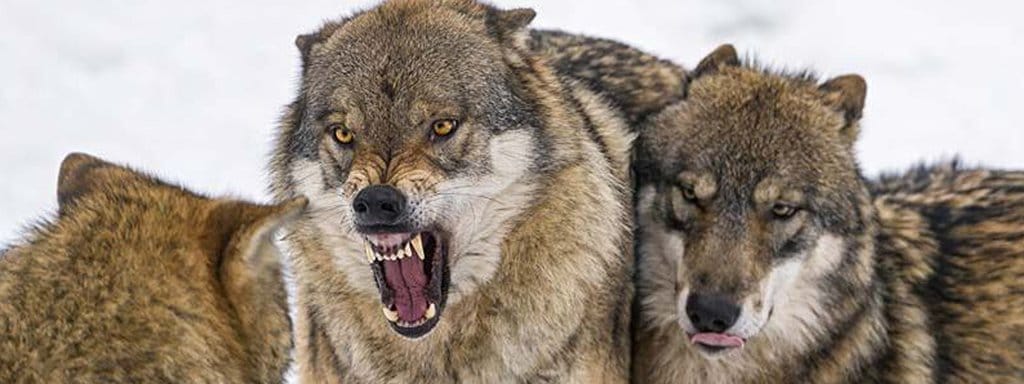
Younger wolves defer to them, and a lower-ranking animal meeting a higher-ranking one will withdraw rather than escalate. Read that as a juvenile deferring to a parent rather than a soldier deferring to an officer and it makes more sense.
Why the others do not breed
The traditional account says the alpha female suppresses her rivals by harassing them until their cycle shuts down, and the male does the same to the other males.
Suppression is real and measurable. But the simpler explanation is usually the correct one: the other wolves in the pack are the pair's own offspring. They do not breed with their parents or with each other for the same reason most social mammals do not.
What a young wolf does instead is leave. Somewhere between two and five years old, most disperse to find unoccupied ground and an unrelated mate, and become the breeding pair of a new family. The position is not inherited or won. It is founded.
The season
Wolves breed once a year and the window is narrow. Fertility peaks across winter, roughly December to March, timed so that cubs arrive when prey is becoming easier to find.
Males reach sexual maturity somewhere between 22 and 46 months, females at around 22 months. The female is monocyclic, coming into season once annually, and the cycle is long: a proestrus of around six weeks followed by roughly a week of receptivity.
That gives a pack exactly one chance a year. Miss it and there are no cubs.

Courtship, which is gentler than the reputation
This is the part that sits oddly against the image of the alpha as a brute, and it is well documented.
A breeding pair spend the run-up to the season in near-constant contact: licking each other's face and ears, pressing together, touching noses, sleeping alongside one another, howling together and travelling as a unit rather than as two animals going the same way.
They also withdraw. Pairs commonly move away from the rest of the family for a period during the season, which reduces interference from the younger wolves.
Wolf pairs frequently stay together for life. For an animal marketed almost entirely on ferocity, the bond between the two animals at the centre of a pack is closer to devotion than to dominance.

The other side of the season
Males do become harder work as the season approaches. Testosterone rises sharply, territorial marking increases, and confrontations with outside wolves are met with more force than at other times of year.
That behaviour is seasonal and specific. It is not the animal's permanent character, which is the impression the older accounts leave.

What alpha means as a symbol
Knowing the biology does not diminish the idea. If anything it improves it.
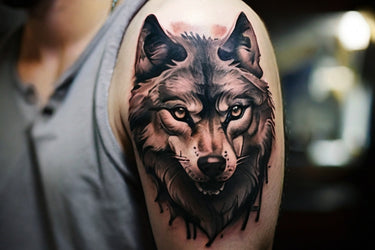
The alpha is not the wolf that beat the others. It is the animal that left home, crossed unfamiliar country alone, found a mate, held a territory and raised a family in it. That is a considerably better thing to wear on a ring than a fight nobody actually had.
Our wolf necklace collection includes alpha designs in steel.

Our wolf watch collection carries the Alpha Wolf Watch for anyone who wants the idea somewhere they look all day.