

Moro, the She-Wolf in Princess Mononoke

Moro is the best wolf in animation, and it is not particularly close. She is three hundred years old, she speaks, she is entirely certain that humanity is a disease, and she raised a human child as her own daughter.
Those two facts about her sit together without resolving, which is the point of the character and most of the point of the film.
The film she is in
Princess Mononoke is a 1997 animated film by Hayao Miyazaki, made at Studio Ghibli and intended at the time to be his last before he returned for Spirited Away. It is the darkest thing he made: gloomy in atmosphere, morally unresolved, and rated PG-13 in the United States, which is unusual for the studio.
Joe Hisaishi wrote the score. Neil Gaiman adapted the English-language version.
The story around her
The film is set in the late Muromachi period, the fifteenth or sixteenth century, and opens in a village of the Emishi, the indigenous people of Japan who by then had largely been conquered or pushed into remote corners of the east.
A demon attacks the village. Ashitaka, the young prince, is wounded fighting it off. The demon turns out to be a giant boar spirit, driven mad by something lodged in its body, and with its last breath it curses him: the wound will kill him.
The elders send him west to find the source of the corruption. He carries the only clue, an iron ball dug out of the boar, and travels through a countryside at war, discovering that the curse has given him unnatural strength alongside the death sentence.
He reaches Tatara, an iron-working town at the edge of the wild, and finds three forces already fighting over it. Lady Eboshi runs the town and defends it with firearms. The forest spirits want it stopped before it eats any more of their home. A samurai warlord wants it for the wealth it produces.
And among the spirits he meets San, a human girl raised by wolves, fighting on their side.
Who Moro is
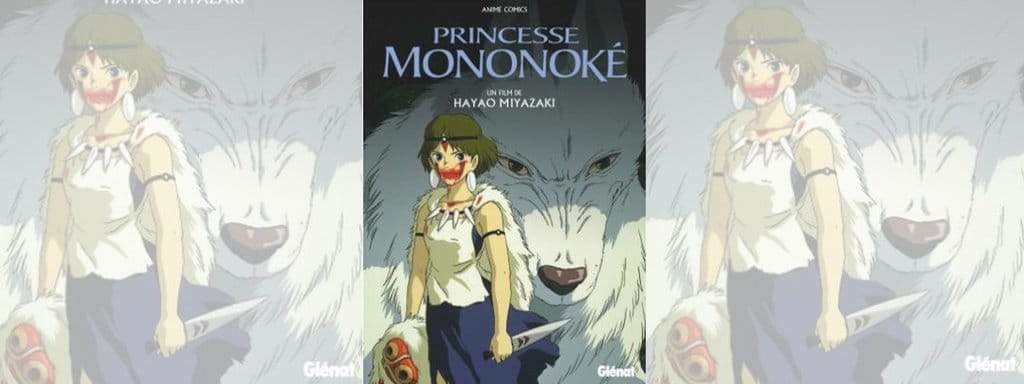
Moro is the wolf god, three hundred years old, with divine power and intelligence and the ability to understand and speak human language. She leads the wolf tribe.
She is stoic, contemptuous and entirely without illusions about what humans are doing to her forest. She is also, and this is the part the character is built on, a mother.
San came to her as an infant. Moro caught the child's parents despoiling her forest and attacked them, and they threw their baby down at her feet as a sacrifice and ran. Moro could have eaten her. She raised her instead.
San grew up moving like a wolf and hating humans with the same clarity her adoptive mother does. That is Moro's doing, and the film does not entirely let her off for it.

Her character, in two directions at once
Moro would do anything to save the forest and the Forest Spirit within it. She has a specific, patient hatred for Lady Eboshi and looks forward to killing her.
She is also tender in a way almost nothing else in the film is. Her scenes with San are quiet, and her clear-eyed assessment of what will happen to her adopted daughter is the most affecting thing she says.
What makes her work as a character is that Miyazaki refuses to make her right. Her hatred is justified and it is still hatred, and the film gives Lady Eboshi her own entirely defensible reasons. Nobody in Princess Mononoke is the villain, which is why it is still argued about.
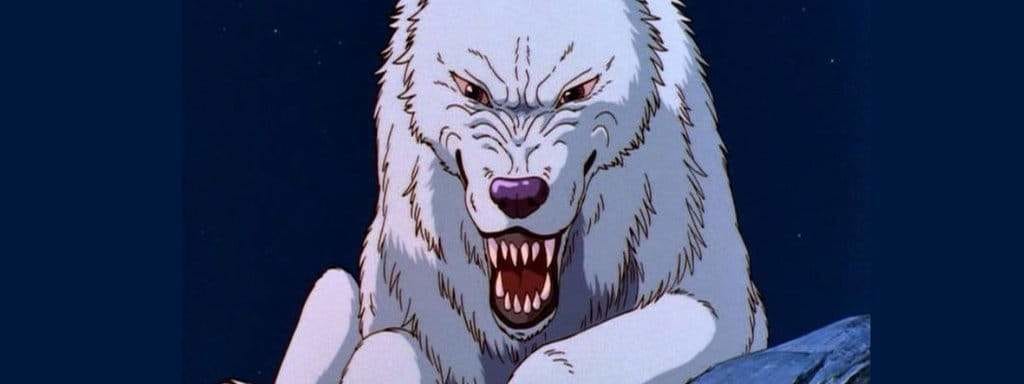
What she looks like
Moro is enormous. San, a full-grown girl, is roughly the size of her head.
Her fur is long and white, her eyes olive, her teeth substantial, her nose a brownish purple. And she has two tails, which is not a naturalistic detail but a signal: in Japanese folklore, extra tails mark an animal that has lived long enough to become something more than an animal.
That single design choice tells you her age and her divinity before she says a word.
The wolf as guardian rather than threat
Moro belongs to a tradition that runs right through Japanese culture, in which the wolf is protective rather than predatory. The Japanese wolf was treated as a guardian of the mountains and of the crops, and shrines were raised to it.
Our wolf mask collection carries Japanese designs including Okami and Kabuki pieces that come from exactly that tradition.
For something worn daily, our wolf necklace collection includes pendants in the same spirit.