

Why Is My Dog Acting Like a Wolf?

Your dog has started howling. Possibly at a siren, possibly at you singing, possibly at nothing you can identify, and possibly for an hour every day while you are at work.
It is not a fault and it is not a warning of anything ominous. Howling is inherited equipment, and working out which reason applies is most of solving it.
Where the howl comes from
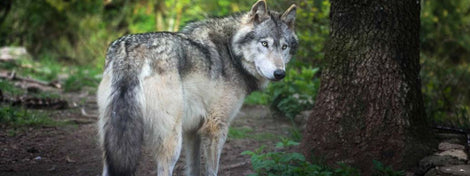
Dogs and wolves sit on the same branch of the family tree, and the domestic dog kept a good deal of the behavioural inheritance along with the genetics.
In wolves, howling is long-distance communication: it keeps a scattered family in contact and tells rival groups the ground is occupied. A dog howling in a suburban kitchen is running that same program with nothing to run it on.
The superstition around it, the idea that a howling dog means bad news, is folklore rather than observation. The same sound from a puppy is treated as charming, which tells you the meaning is in the listener rather than the animal.

Some breeds do it far more
Howling is not evenly distributed, and breed is the best predictor of whether you will hear it at all.
The lupoid breeds howl most: dogs that resemble wolves in build and in behaviour, including the Saarloos wolfdog, the Czechoslovakian wolfdog, the Siberian Husky and the Greenland dog. Owners of these breeds are rarely surprised by it.
Larger northern breeds are next, with the Husky and the Alaskan Malamute the most reliable howlers of all.
Size is not the whole story though. Beagles and Dachshunds howl readily despite being nothing like a wolf in build, because both were bred for hunting work in which carrying voice over distance was the point.
And plenty of dogs never howl at all. That is equally normal.

The nine reasons a dog howls
Work out which one applies and you will know what to do about it.
- Greeting. Some dogs howl when you come home, which is closer to celebration than complaint.
- Contact. Answering other dogs within earshot, exactly as a wolf answers a distant pack.
- Separation distress. Howling alone in an empty house is the single most common cause, and the one most likely to involve the neighbours.
- Territory. Announcing that the ground is occupied, usually in response to something passing outside.
- Boredom. An unoccupied dog will make its own entertainment, and howling is free.
- Pain or injury. The one to take seriously. A dog that starts howling out of character, particularly when touched or when moving, needs a vet rather than training.
- Distress. Trapped, stuck or frightened.
- Sirens and high sounds. Ambulances, alarms and car horns fall in a frequency range close to a howl, and many dogs simply answer them.
- Music and singing. Same mechanism. Your dog is not criticising your voice, it is treating it as a social call.
Night howling seems more frequent than it is, mostly because the house is quiet and sound carries further after dark.
What to actually do about it
Match the response to the cause, because the wrong fix does nothing.
For boredom and separation, the answer is occupation rather than correction. A large chew, a food-dispensing toy or a puzzle feeder covers a surprising amount of a working day. Rotate what is available so it stays interesting.
For separation distress specifically, build up time alone gradually rather than leaving for eight hours and hoping. Leaving something that smells of you helps more than it sounds like it should.
Exercise before you leave rather than after you return. A dog that has already run is a dog that sleeps through the morning.
Punishing a howl rarely works and often makes it worse, because attention of any kind rewards the behaviour when attention was the point. Ignoring attention-seeking howls and rewarding quiet is slower and considerably more effective.
And if the howling is new, sudden and out of character, rule out pain first. That is the one cause where management is the wrong answer entirely.

The wolf in the living room
Every dog carries some of this inheritance, which is a large part of why people find the wolf a compelling animal in the first place. The howl is the clearest surviving evidence of it.
Our wolf figurines collection includes husky and wolf models for anyone who enjoys the resemblance.

Our wolf necklace collection covers pendants for wearing the same idea.